Seeing Hospitality Up Close: Why We Sent Evie To Berlin
“The difference between something good and something great is attention to detail”
Seeing Hospitality Up Close: Why We Sent Evie To Berlin
Hospitality wears many faces.
In some places it’s warm, familiar and conversational. In others, it’s quiet, precise and almost invisible. On the surface, those worlds can feel far apart. Yet beneath the differences in style, pace and personality, the same ideas tend to hold them together - preparation, care, and an unshakeable respect for the guest. It’s those ideas we wanted one of our team to see up close.
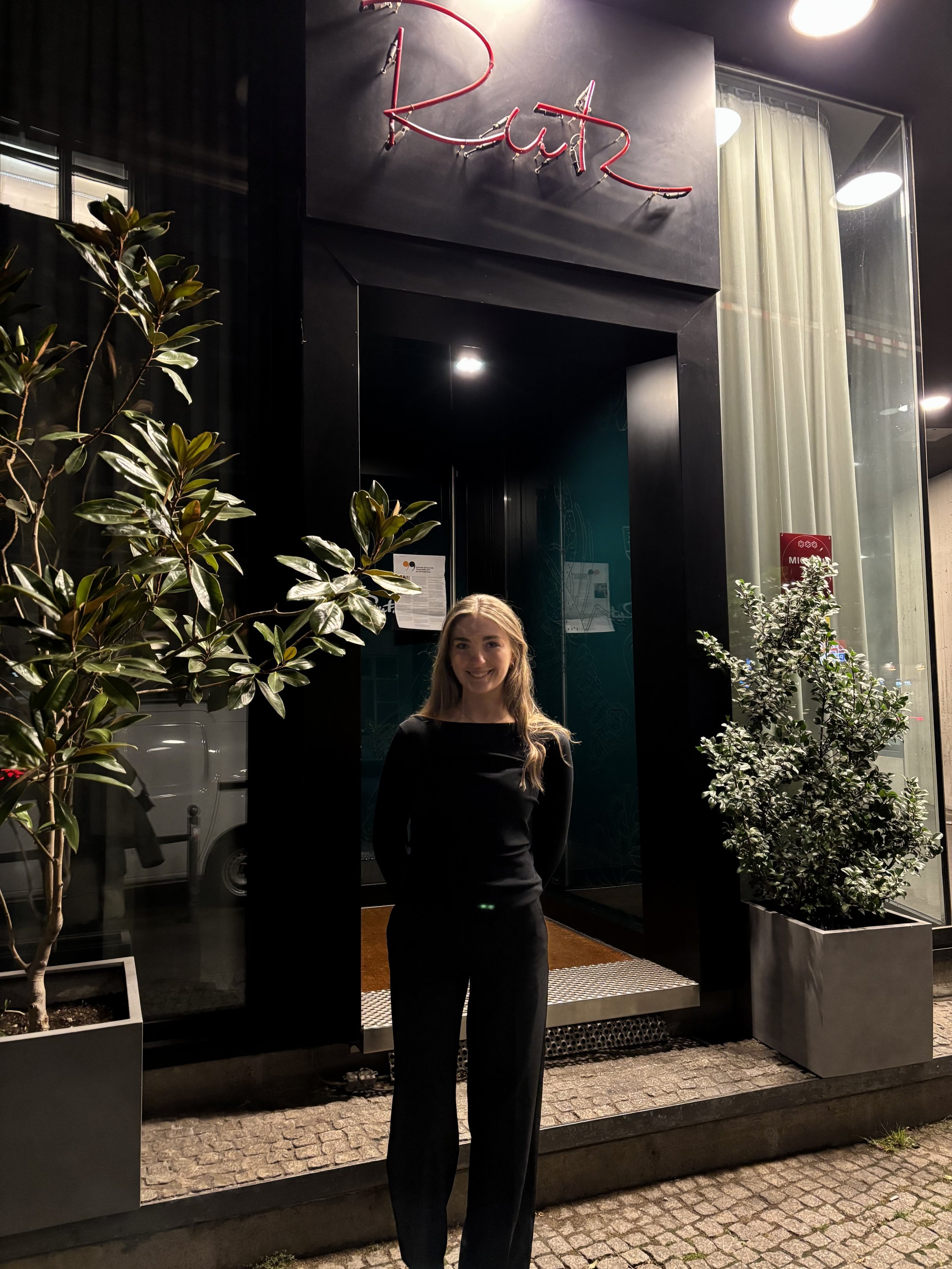
Late last year, our Evie spent a week working at Rutz, a Michelin-starred restaurant in Berlin known for its meticulous standards, highly structured service and deeply considered approach to food and wine. The intention wasn’t imitation. It was exposure - to what hospitality looks like when every variable is controlled, every detail examined, and nothing is left to chance.
About Evie
Evie is 19 and has worked with us for just over two years. She works front of house and behind the bar, and from early on it’s been clear that she sees hospitality as something to build a future in. She’s curious about how places operate, how teams are led, and how good service is sustained over time. That curiosity matters.
Hospitality is an industry where development is often informal, accidental, or left until much later than it should be. At the same time, retaining good people, especially young people with ambition, is increasingly difficult. Investment, when it happens, is often reactive rather than intentional. This placement was the opposite of that.
Evie mentioned Berlin in passing, a city she found interesting, culturally and creatively. Through a family connection, we have a link to Rutz, where Clemens works as assistant sommelier. The opportunity existed, and the question became whether to use it meaningfully. The aim was simple: to give Evie a taste of the best. Not to overwhelm her, not to glamourise the industry, but to show her what serious hospitality looks like when it’s treated as a craft.
Inside Rutz: A Different Expression Of Care
Rutz is calm, restrained and precise. The dining room is elegant without being showy. Service is quiet, fluid and almost invisible. Evie’s first impression wasn’t intimidation, but order. Everything moved with purpose. Plates were placed at the table at exactly the same moment. Coats were taken smoothly on arrival. Water glasses were refilled constantly. Guests were offered a hand cloth before the meal began. Only then would the manager approach, followed by the sommelier to guide them through pairings.
This was hospitality expressed through structure rather than conversation. The aim was not to be noticed, but to ensure nothing jarred, nothing distracted, nothing disrupted the flow of the evening.
The Demands Of Excellence
What stayed with Evie most wasn’t what guests saw, it was what they didn’t. Staff arrived at 2pm for a 6pm service. Four full hours of preparation. Tables set and reset. Plates checked and rechecked. A detailed briefing that covered each guest individually. At Rutz, thirty covers is a full restaurant, and each one is treated with the same seriousness. Service often ran until midnight. Despite the scale of preparation, the team is small - just nine members of front of house. The kitchen itself was compact, yet calm. Chefs were focused but relaxed, undermining the stereotype of high-end kitchens as hostile or volatile spaces. It felt, Evie said, like a military operation - not in tone, but in discipline. Every role was clear. Every action considered.
One moment during service captured the ethos of the restaurant more clearly than any explanation. As Evie carried a tray of plates through the dining room, a small leaf fell from one of the dishes - a mussel course - as she moved. The restaurant was busy. Service was flowing. The error was barely visible. The dish was immediately taken back and replaced in full. Service paused. The rhythm stopped briefly. Not because the mistake was dramatic, but because the standard mattered. There was no assessment of whether a guest would notice. There was no allowance for pressure or pace. Every guest received the same experience, every day.
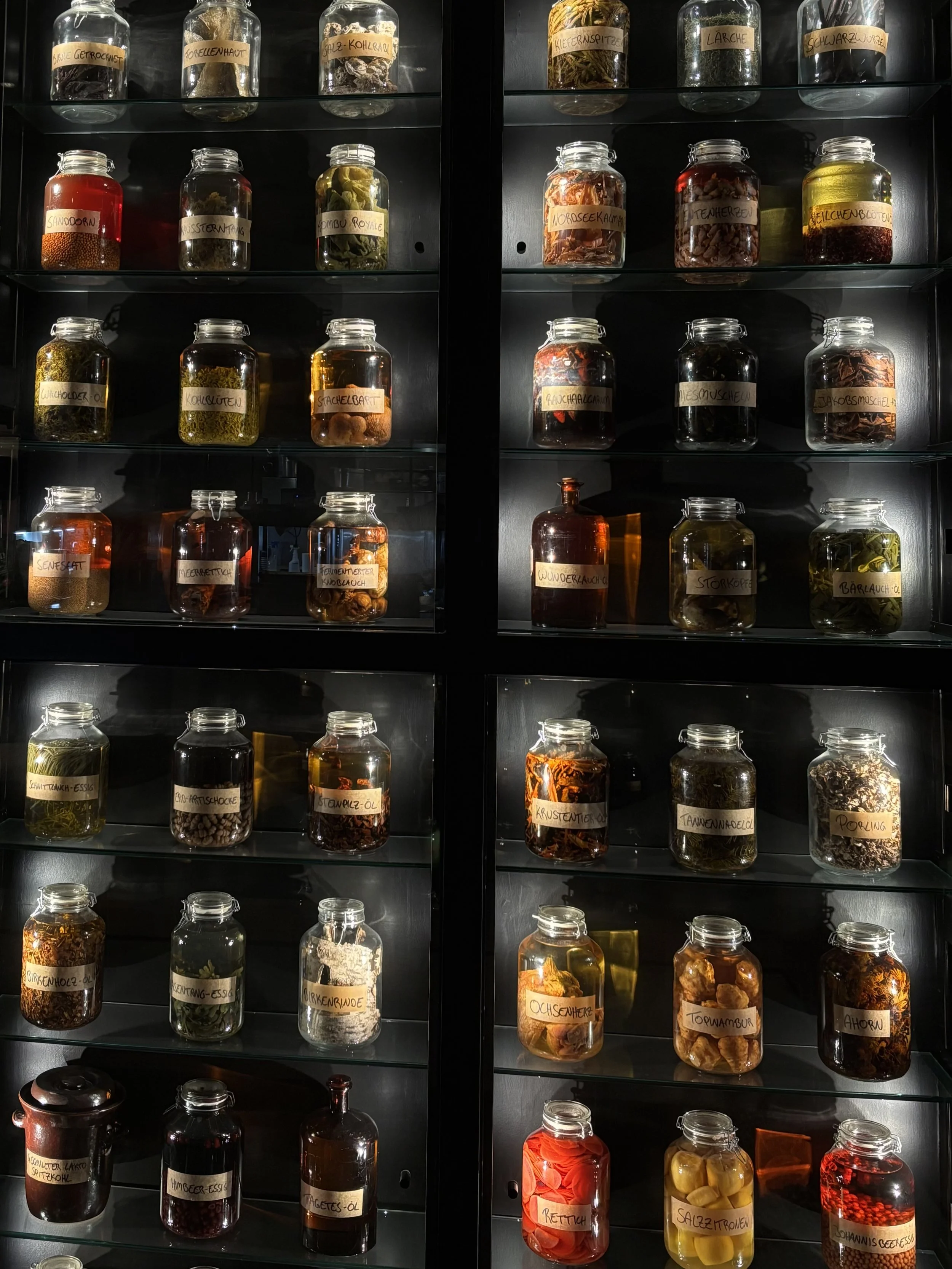
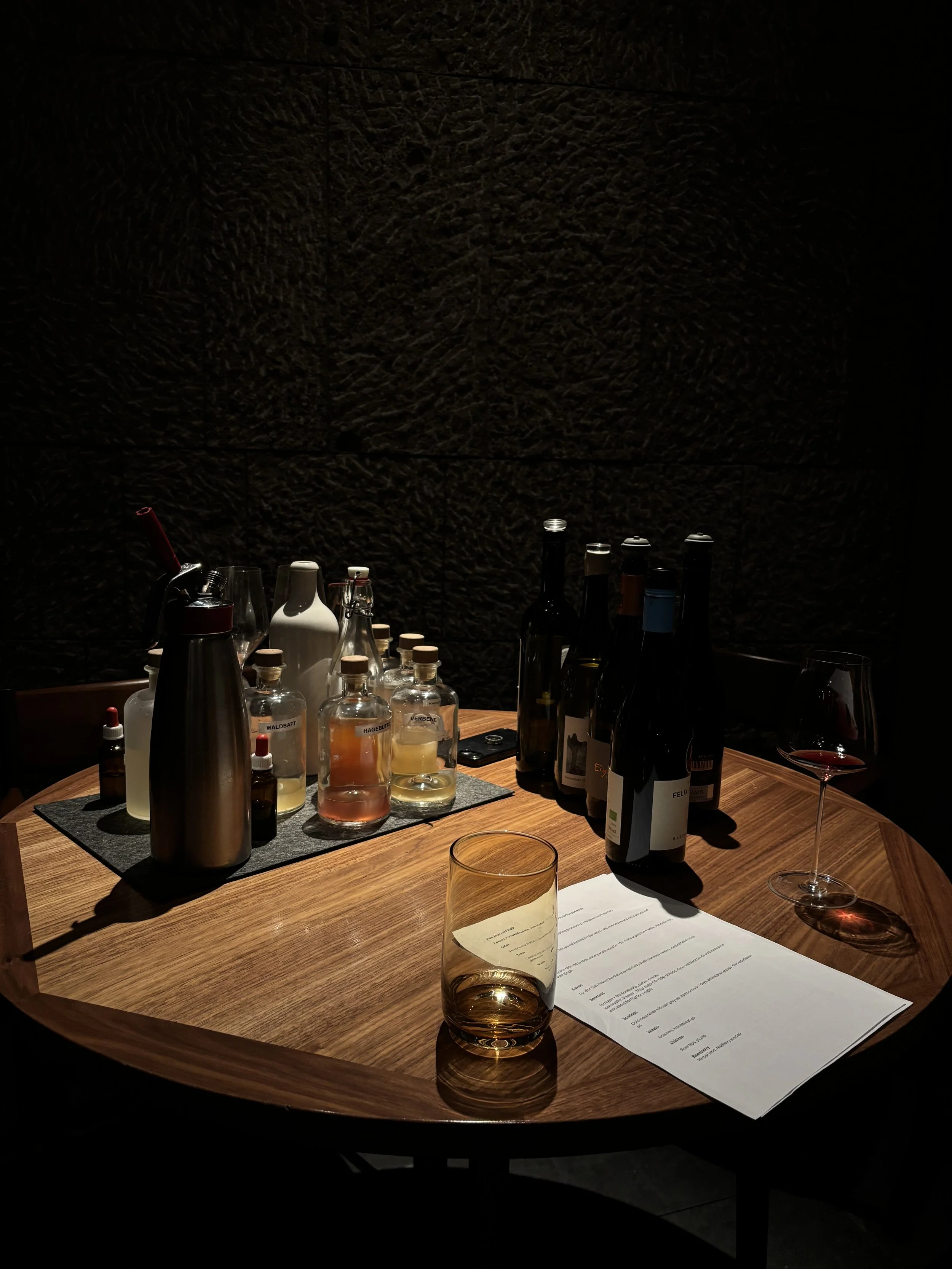
Evie spent much of her time observing Clemens, whose enthusiasm for wine and pairings left a strong impression. He took her through every pairing - wines and fermented juices - over the course of two hours. Kombuchas, house-made ferments, carefully designed alternatives for each course. At first, Evie felt slightly self-conscious sitting through it all. But the point soon became clear. At Rutz, staff are expected to taste everything. To understand every element of the menu. Immersion isn’t encouraged, it’s required. Passion isn’t performative; it’s built through knowledge and repetition. The food itself felt eye-opening. Light, refreshing, unfamiliar. Small portions with extraordinary attention to detail. Nothing excessive. Nothing incidental.
Different rooms, shared principles
Berlin itself mirrored the dining room - international, layered, multilingual. Guests from across Europe. Staff speaking multiple languages. A shared understanding of the rhythm of the evening, regardless of where someone came from.
Evie’s role during the week was deliberately limited. She ran food, observed service, and absorbed as much as possible. She was corrected for not opening the door for guests heading to the toilets. Water glasses were never allowed to sit empty. Small details were treated as essential, not optional.
This was a very different style of hospitality to our own - quieter, more controlled, more invisible. At The Cartford, warmth, conversation and familiarity sit at the heart of what we do. Guests expect to be seen and spoken to. But the seriousness underneath is the same. Preparation still matters. Consistency still matters. Respect for the guest still comes first. The expression changes; the principles do not.
What this experience was really for
Evie didn’t come back wanting to replicate what she’d seen. She came back with clarity. Seeing hospitality at this level - so deliberate, so disciplined - sharpened her understanding of what good service requires behind the scenes. It’s given her confidence in her own instincts, a stronger sense of responsibility, and a clearer picture of where a career in hospitality might take her. She’s more engaged with guests. More aware of detail. More confident talking about what we do and why we do it. These aren’t abstract benefits - they’re visible, day to day, in how she carries herself on the floor. This is the real point of experiences like this.
Sending a 19-year-old to work in a Michelin-starred restaurant for a week isn’t about headlines or prestige. It’s about belief. Belief that hospitality is a profession worth taking seriously. Belief that young people respond to responsibility when it’s offered thoughtfully. Belief that exposure, not instruction, is what builds confidence and ambition.
In an industry that struggles to retain talent, investment like this is a statement. It says that development isn’t reserved for later, and that potential is worth backing early.
Where Evie goes next in her career will be her choice. But experiences like this widen the path ahead of her. They give context, ambition, and a sense of what’s possible when standards are protected and care is taken seriously.
The thread that binds it all together
Good hospitality doesn’t all look the same. Some of it is quiet and precise. Some of it is warm and familiar. But the best of it is always built the same way - through preparation, consistency, and respect for the guest. Giving Evie the chance to see that up close wasn’t an indulgence. It was an investment. And it’s one we’re proud to make.